
Data Behind the Scenes: The Soil Inventory Project
March 10, 2026 | Celine Takatsuno
The Soil Inventory Project: Dr. Kelsey Jensen, Claire Lafave, and Dr. Lowery Parker
The Soil Inventory Project (TSIP) is a nonprofit organization working to make soil data more accessible, actionable, and valuable across the agricultural supply chain. We were introduced to Kelsey Jensen, then-COO, shortly after we first proposed a Better Deal for Data in our 2024 whitepaper. This led to a collaboration resulting in the first fully implemented BD4D pilot in 2025. We asked Kelsey and the TSIP team, including Claire Lafave, Chief of Staff, and Lowery Parker, Head of Data Equity, about their mission, data, and impact, and how BD4D helps to support their goals.
TSIP supports farmers, land managers, labs, and agricultural tech companies with innovative tools and a soil database. What can you tell us about the tools and the data? Where is the data sourced, and why is it so important?
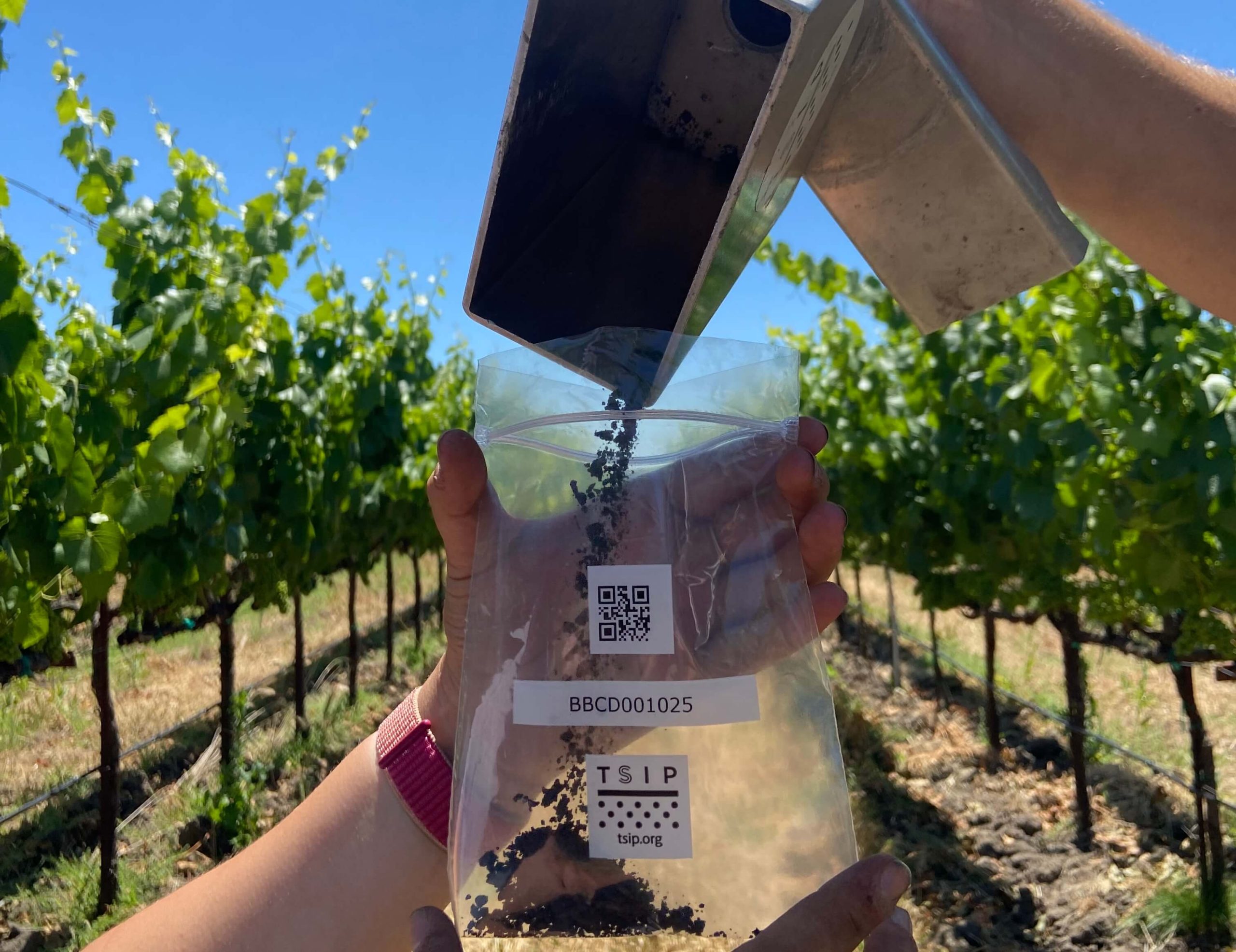
TSIP builds tools to support soil sampling and analysis that are accessible to farms of any size. Our flagship platform is Fieldvision, which is a web and mobile system that guides users through the entire soil sampling process–from planning where to sample, navigating to those locations, and recording field observations, to providing analyses and novel insights from the data. Our goal is to provide free access to multi-model predictions for soil carbon, emissions, and yields across the United States. We do this by aggregating data across regions and cropping systems, and then using that data for research that actually provides value to stakeholders.
The data comes from multiple sources: farmers collecting samples through our mobile app, partnerships with labs and ag-tech companies, researchers conducting field studies, and commercial operations contributing existing datasets. Everything flows into our secure soil database which underpins the rest of our research and tools.
This data infrastructure is critical because soil data has historically been fragmented and locked away in proprietary systems. As a nonprofit, we’re building neutral, science-based infrastructure that serves everyone, not just commercial interests. This enables farmers to understand the impact of their practices, helps researchers understand what works where, and provides the foundational data needed to unlock investment in improved agricultural outcomes, all while keeping farmers’ data secure and under their control.

Focusing on your Fieldvision platform for a moment, who is using the app, and how does data get shared?
Our app is primarily used by farmers and organizations that work with farmers. They use it to create sampling designs, take soil samples on the farm, track management information, and then visualize their results.
We share aggregated data to provide benchmarks for different regions. So a farmer in, say, Rhode Island, can see how their soil carbon values compare to other producers in that state. In this case, data is both aggregated and anonymized. We also partner with organizations like universities to conduct research on non-anonymized data. These partners are held to strict data security standards, and cannot share or publish the data.
We are working on a public data download that would be accessible to anyone who wants to use the data for purposes that align with our mission. In this case, data would be anonymized at a spatial level that the user selects, such as exact location, state, or region.
You were one of our first proof of concept partners. What data challenges were you working through that interested you in the Better Deal at such an early stage?
We spend a lot of time trying to convince producers and partners to share their soil data with our database. There are different pillars that need to be established in order to succeed at that, such as demonstrating comprehensive data security and providing some benefit in return. What we were missing was a way to communicate that we would be good stewards for their data, and that they could trust us to fulfill our mission.
We were connected with the Better Deal team at a perfect time, just when we were revising our Data Use Policy. Talking through each of the Commitments with you and with our leadership team to see how our policy aligned with BD4D–or not–helped us with challenges and creative solutions, and sometimes meant amending our policy. Our policy is now fully aligned with the BD4D Commitments!

We were excited to see how you’ve incorporated the Commitments into the Fieldvision onboarding process. We weren’t expecting to see BD4D directly in the app!
Our initial idea was to just add something about the Commitments to the Data Use Policy. But putting it into Fieldvision was a more direct option that highlights our commitment to these principles, and we were able to integrate it pretty seamlessly into our existing process.
Now, when a user creates an account on Fieldvision, they follow a series of onboarding screens. First, they’re given a brief overview of our mission, and why data sharing is essential to our success. This links to the Data Use Policy, a statement that the policy is consistent with the Better Deal for Data, and a link to the BD4D website.
Next, we clearly communicate how their data will be shared, and provide the option to have their personal information anonymized. Finally, they can choose which level of spatial anonymization consent they are comfortable with (spatial anonymization removes identifiable or sensitive information from geographic and land data) before completing the onboarding process.


Especially for someone who is not familiar with agriculture or soil data, can you tell us about the impact you hope to achieve with your tools and with data?
This is a great question because it addresses one of the fundamental challenges in our work: developing value that is both transformational in the long term, and still immediately relevant to on-farm businesses. The broader vision is to make soil data more valuable to all actors across the space, by building confidence in practice-to-outcome claims (i.e. making it easier to link what a farmer does on their land to a particular result, such as increased or decreased crop yields or greenhouse gas emissions.)
We do this by aggregating previously fragmented data at a scale that can produce models with reduced uncertainty, provide accurate benchmarks for land managers, and build confidence in agricultural management at-large. This confidence is the real transformational piece, especially for the regenerative agriculture value chain.
Without reliable practice-to-outcome data, farmers lack information about the expected impacts of adopting new practices on their yields and profits. Markets cannot price carbon or ecosystem services with confidence. Financial institutions cannot assess risk for agricultural lending. The entire value chain stalls because we cannot answer the basic question: does this practice actually work, and to what degree?
But building this confidence takes time, and trust. The more immediate value is in our low/no cost sampling services and automated soil carbon insights that can help land managers understand where they stand and where they might be able to go. We’re developing more finely-tuned benchmarking systems, including a comparison tool that will provide context to the soil test results producers receive, helping them understand where they stand in comparison to similar farms and what opportunities they have to improve their outcomes. The more data users add to Fieldvision, the more accurate these benchmarking results will be!

As stewards of agricultural data contributions, TSIP is committed to building trust-based partnerships in the agricultural sector to improve outcomes for all. We’re grateful for the trust and time they’ve invested in the Better Deal for Data, and thrilled to welcome them as our first BD4D Adopter!