
July 2025 Newsletter
July 8, 2025

Across regions and countries, people, communities, and nonprofits are sharing their data challenges, opportunities, and stories with us. Our conversations introduce new perspectives and important questions, and remind us yet again that social sector data represents more than numbers – it represents, and impacts, individual human lives.
We’re wrapping up our initial sprint of conversations and interviews about data, with dozens of nonprofit organizations and the individuals and communities they serve. We’ve talked to farmers and ranchers, cooperatives and coalitions, and researchers, technologists, and social entrepreneurs representing agriculture, caregiving, human rights, youth, and more. These ‘Data Consultations’ help us learn about the real world benefits and challenges people experience in data collection, use, and sharing as we develop the Better Deal for Data.
To paraphrase Amy Sample Ward, NTEN CEO: Who is not here? Who is left out? Who gets to tell the story? And how do we bring those who are hidden to the table?
We’re always listening for more stories about data use and sharing, and their impact for people and communities everywhere. If you’d like to contribute your data experience, we’d love it if you might take a few moments to drop us a note or complete our short questionnaire.
Exploring our Major Questions
By providing a clear set of principles for data governance that can be adopted across communities and organizations, we seek to provide the foundation for a shared commitment to good data stewardship, transparency, and trust. And, while our approach may seem simple, none of the questions about the data in the Better Deal for Data are straightforward. They are interwoven, and at times, quite knotty.
– from ‘A Foundation for Trust’, Major Questions Essay #1
This spring, we launched our Major Questions essay series, where we discuss the most common, and often the most fundamental issues that have been raised as we’ve shared the Commitments across the field. Our initial papers have examined trust and data in the social sector, data for nonprofit funding, AI for social impact, open data, and what each means in the context of the Better Deal for Data Commitments. We have more essays on the way – what big questions do you have about how the Better Deal will work in the real world?
From Principles to Practice
This summer we’re excited to be working with partner organizations to test different ways of putting the Better Deal for Data Commitments into practice. While this marks a key milestone for the program, we’ve already started with our first official implementation: Terraso, another Tech Matters project, has updated its Terms of Service to reflect our BD4D commitments. To further strengthen these efforts, we are revising our organizational Privacy Policy to align with BD4D as well. We could not have a more perfect opportunity to learn, firsthand, about the feasibility and ease of incorporating the Commitments into a legal agreement. With pro bono support from a top-tier legal team, we’ve been documenting the process along the way. You can read more about how we did this in this recent Tech Matters blog post, and watch the Terraso website for their updated Privacy Policy!
Better Deal for Data on the Road
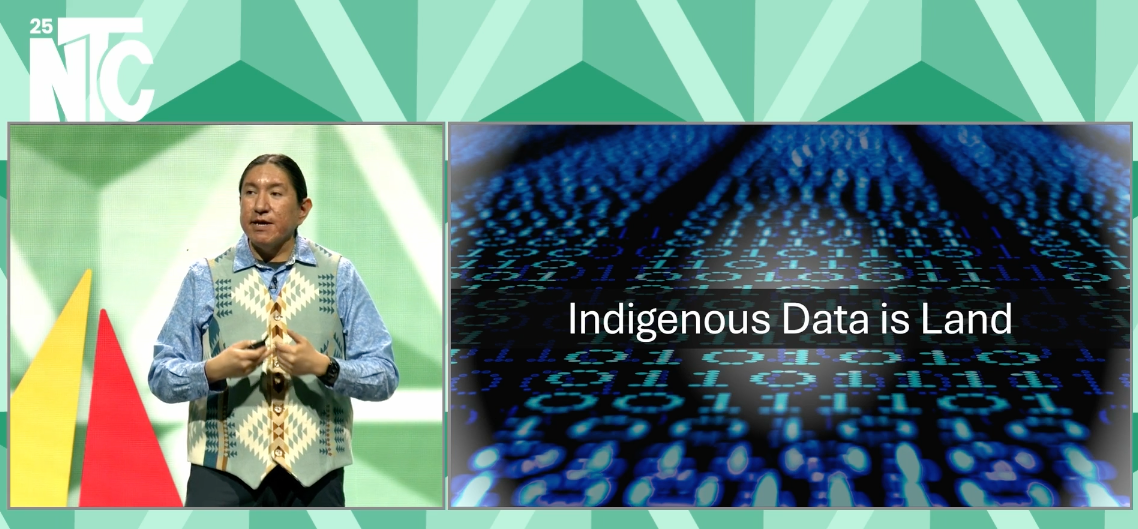
For many people, this time of year means conference and event season, and the Better Deal for Data team is no exception. For Jim, that means meeting with global social impact leaders at the Skoll World Forum, leading a couple of sessions at the Good Tech Fest in Utah, and giving a well-received plenary talk at Stanford Social Innovation Review’s Data on Purpose Virtual Summit. For Celine, this meant a return to the NTEN Nonprofit Technology Conference (25NTC) in Baltimore, MD, where she joined more than 1500 other attendees who are leveraging technology for good. She found herself discussing data and AI at every turn – including at our Better Deal for Data Birds of a Feather round table, where participants highlighted how they work with data to serve their communities, and the benefits, challenges, and risks they encounter when data is used or reused.
What’s Next

If you haven’t visited our website in awhile, we’ve made some exciting updates. You can read all of our research papers and blog posts, learn more about the project, our progress, and our endorsers, and get the latest event news.
We have a lot coming up these next few months: more major questions, case studies from the field, and building our initial Better Deal for Data Playbook. We can’t wait to share!
And, as always, we look forward to hearing from you! Share your data stories, feedback, and questions with us directly at [email protected].
– Jim, Steve, and Celine
P.S. Know someone else who should be part of the Better Deal for Data movement? Spread the news(letter) here!